
A battery pack design and manufacturing platform, built for low-volume manufacturers.
Arc is IONETIC's technology platform that combines hardware, software, and manufacturing technologies to deliver custom battery systems four times faster and ten times cheaper than a traditional custom programme.

Arc is a step-change in how we deliver custom battery systems.
Arc is IONETIC's technology platform, and it has three parts: pre-validated hardware architectures, a software stack keyed to those architectures, and a flexible manufacturing system that can build any battery pack designed using the architectures. To you the pack is bespoke. To us it is a configuration of an architecture that is already engineered and in vehicles.
Arc directly addresses the three things that make custom battery packs expensive.
A custom pack is the right answer for almost every vehicle. It is also, by the traditional route, a three to four year programme with eight or nine figures of engineering in front of it. That is not a pricing problem. It is a structural one, and it has three causes.
Requirements in. An engineered pack out.
We have built a software stack to significantly accelerate the development of custom battery systems. From our cell selection and pack design engine, to our systems engineering and project management tools, all developed to get you to market faster, and integrated with our technology platform to drive efficiency.
90% of the engineering is done before your programme starts.
At IONETIC, we've developed battery architectures. These are truly flexible, not modular, and enable us to deliver millions of possible configurations. Across every configuration in that design space the interfaces are identical, and the interfaces are where almost all of the engineering lies. We did that work once and validated it, so when your configuration is selected, the engineering underneath it is already complete.
%20Marine%20Battery%20Pack.png)
Give us the numbers you already know and our team will come back with viable configurations rather than a brochure. Estimates are fine, give us your best figure and note what is still moving in the last box. Fields marked * are required.
One line. Every configuration.
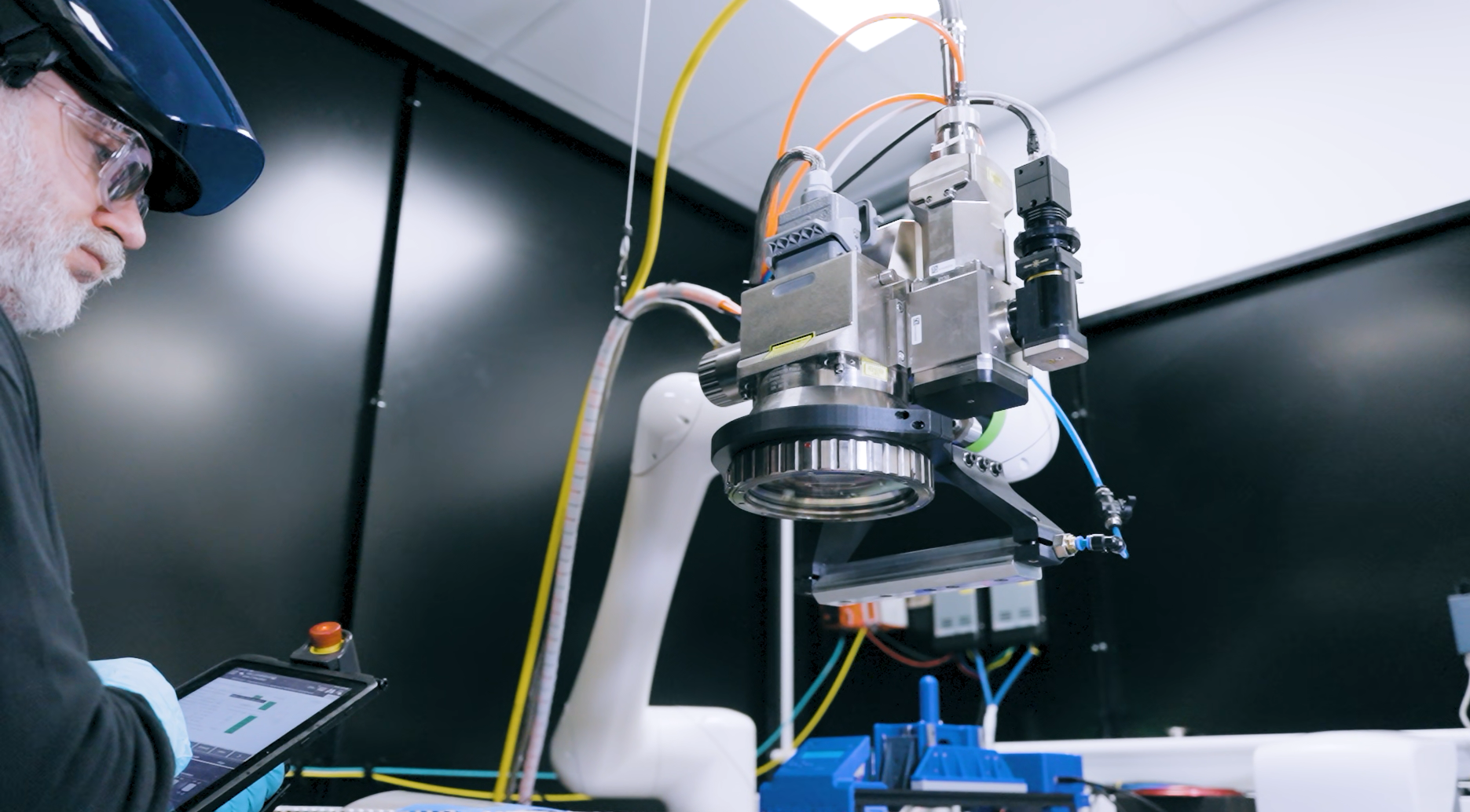
Every rule in the architecture is mirrored by a process on the line, so any pack the software can design, the line can build. Nothing is re-tooled to move from one customer to the next, which is what makes a low-volume programme affordable to industrialise.
Off-the-shelf, modular, full custom, or an architecture.
Our architectural approach is a fundamentally different way to develop custom battery systems, unlike off-the-shelf or modular platforms.
Three technologies. One accountable partner.
The software cannot exist without the architecture, because it needs a complete rule set to automate against. The line is only flexible because it mirrors that same rule set, process by process. And the architecture only pays for itself because the software can exploit the design space and the line can build any point in it. Remove one and the other two stop being worth anything.
Nominating separate design, engineering, and manufacturing partners adds cost, project management overhead, and risk to a vehicle programme. We take full responsibility from first concept to production to after-sales, with our teams working concurrently. One point of contact, one cost, and one warranty.
Automated design tools, flexible hardware architectures, and adaptable manufacturing let us balance competing requirements rather than trading them off. Whether the priority is power delivery, cycle life, or packaging, you get a pack engineered to enhance the vehicle instead of a compromise the vehicle has to absorb.
A custom programme has traditionally meant development costs that put it out of reach of all but the largest global OEMs. Pre-validated architectures remove the most expensive phases of a ground-up development, so you get the performance, packaging, and integration of a truly custom pack for a fraction of the cost.
Our software automates design and simulation work that traditionally takes months of manual engineering, on architectures whose validation burden is already largely discharged. Every design is linked to our manufacturing process from day one, which removes the redesign loop that follows most prototype builds.
Start your battery development programme.
Speak to our team about how we can help deliver your next electrification programme faster, cheaper and with more confidence.
FAQ
How the platform works, and what it changes for your programme.
What is a battery pack design platform?
A battery pack design platform is a new way to develop custom battery systems. It combines pre-validated hardware architectures with a software stack that turns vehicle requirements into a manufacturable pack design quickly. Because the architecture defines the internal interfaces in advance, most of the design work becomes rule-bound and can be automated rather than engineered from scratch each time. To you the pack is bespoke. To us it is a configuration of an architecture that is already engineered, validated and in vehicles, and that is what removes the cost and timeline of a ground-up development programme.
What is cell-to-pack battery design?
Cell-to-pack removes the intermediate module layer and mounts cells directly into the pack structure. That recovers the mass and volume the module housings, fixings and interconnects would have taken, so more of the pack envelope becomes usable energy, and it cuts part count. The pack structure has to do more work in return: carrying and protecting the cells, managing heat, and often contributing stiffness to the vehicle itself. IONETIC uses cell-to-pack architectures where that trade favours the application, including bus packs engineered around structural members and passenger access, and prismatic blade formats for commercial vehicles.
How does software reduce battery pack prototyping costs?
Pack design is a multivariate problem, and the traditional answer is expert engineers iterating towards a solution over months. Our software explores the whole design space instead and solves for the best specification against your requirements, in minutes rather than months. Because that software is keyed into our hardware architectures and our production processes, the pack it designs can go straight into production rather than through a redesign loop after the first prototype. Fewer physical iterations means less tooling, less test time and a shorter path to a design that works.
Which cell formats and chemistries does IONETIC support?
IONETIC's hardware architecture supports LFP, LMFP, NMC and NCA, across cylindrical and prismatic formats, built around four different cell form factors. Between them those architectures support millions of possible pack configurations. We can also supply mechanically identical packs that differ only in the cell, with no re-tooling, so a change of cell supplier or chemistry does not become a new pack programme.
How can a battery pack be custom and pre-validated at the same time?
Because it is the architecture that gets validated, not the individual pack. An architecture fixes the internal interfaces in advance: how cells are held, how heat is moved, how current is carried, how the pack is sealed, and how it mounts to the vehicle. Once those are engineered and proven, a specific pack becomes a configuration of them rather than a new design. To you the pack is bespoke, shaped to your envelope and your performance targets. To us it is a configuration of an architecture that is already engineered, validated and in vehicles. That is what removes the most expensive phases of a ground-up development, and it is also why the validation burden does not restart with every programme.
What is involved in battery pack vehicle integration?
Integration covers the mechanical fit and mounting, the structural contribution the pack makes to the vehicle, thermal interfaces with the cooling system, the high-voltage and low-voltage electrical architecture, and the software interface between the battery management system and the vehicle. It also covers the validation and homologation programme, since the pack has to be approved as part of the vehicle rather than in isolation.
What is NRE, and why is it so high for custom battery packs?
NRE, or non-recurring engineering, is the one-off cost of designing, tooling and validating a pack before a single unit ships. It is high for custom packs for three reasons. The design work is done from scratch, so months of manual engineering are billed to one programme. The validation and homologation work has to be run for that specific pack. And no battery pack manufacturing line is built to produce hundreds of different packs, so the capital cost of a dedicated line, spread across low volume, makes the economics impossible. Pre-validated architectures, automated design work and a shared flexible production line spread that cost across many programmes instead of one, which is what brings NRE within reach of a low or mid volume manufacturer.
Can I change battery chemistry without redesigning the pack?
Yes, if the pack was designed for it. IONETIC's architectures are chemistry agnostic, and we can supply mechanically identical packs that differ only in the cell, with no re-tooling. Arc runs the chemistry and cell selection computationally, evaluating LFP, LMFP, NMC and NCA against your vehicle brief, packaging envelope, duty cycle, performance requirements and programme economics in parallel, rather than starting from a cell that has already been chosen. That makes chemistry a cell-level decision instead of a programme-level redesign, which matters when cell pricing or supply moves during a vehicle's production life.